
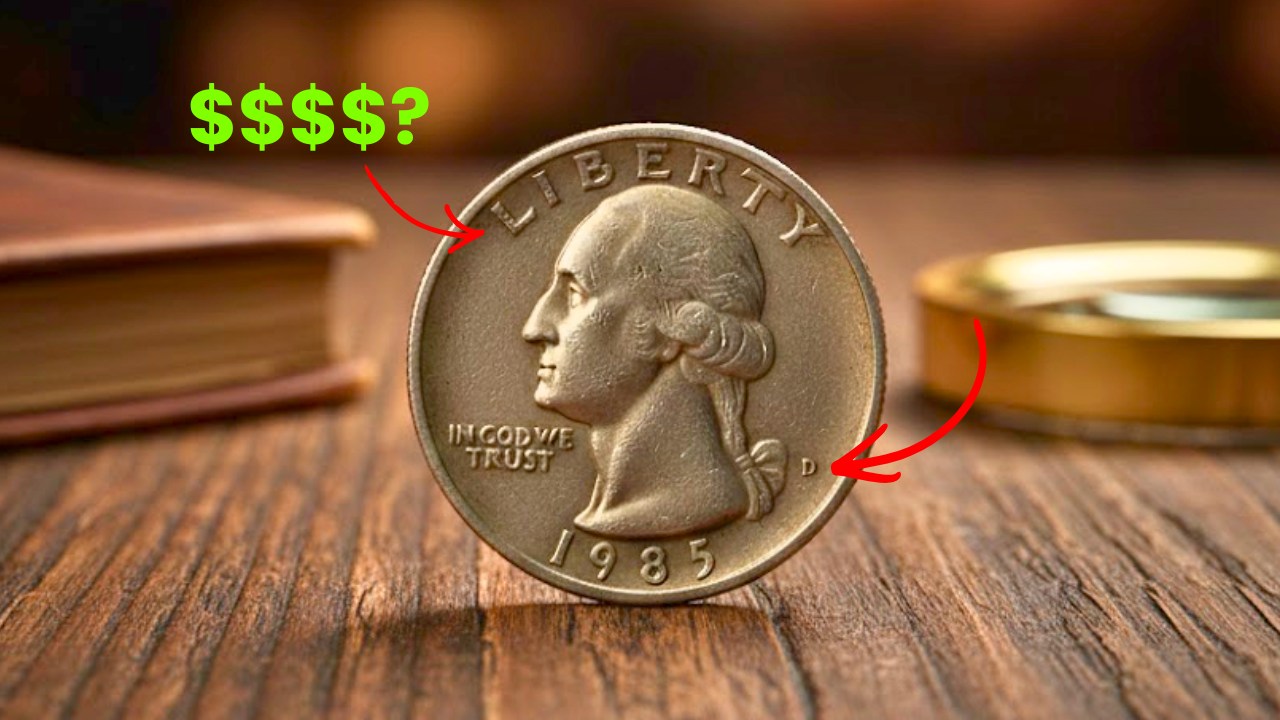
Rare 1985-D Quarter: Coin collecting is full of surprises, and sometimes those surprises are hiding right in your pocket change. One of the most overlooked coins in circulation is the 1985-D Washington quarter. At first glance, it looks completely ordinary. Millions were minted, and most are only worth face value. However, a small number of these quarters contain rare minting errors that can make them extremely valuable. In the right condition, some 1985-D quarter errors have sold for hundreds or even thousands of dollars.
Why the 1985-D Quarter Is Special
The 1985-D quarter was struck at the Denver Mint and features George Washington on the obverse and an eagle on the reverse. Over 500 million of these coins were produced, which makes normal examples very common. Because of this high mintage, collectors usually ignore standard 1985-D quarters unless they are in exceptional uncirculated condition.
What makes this coin special is not its design or age, but the minting mistakes that occurred during production. During the mid-1980s, quality control at U.S. mints was not as strict as it is today. This allowed a variety of errors to slip through and enter circulation, where some remain undiscovered even now.
Off-Center Strike Errors
One of the most eye-catching errors on a 1985-D quarter is an off-center strike. This happens when the coin blank is not properly aligned with the dies during striking. As a result, part of the design is missing, and the coin may appear shifted to one side.
The value of an off-center 1985-D quarter depends on how dramatic the misalignment is. Coins that are only slightly off-center may sell for $50 to $100. However, examples that are 30 percent to 50 percent off-center, while still showing the date and mint mark, can sell for $500 or more. Extremely dramatic off-center strikes in excellent condition have reached four-figure prices at auction.

Double Die Errors
Double die errors are among the most popular and valuable mint errors. These occur when the die used to strike the coin receives a doubled image during its creation. When the coin is struck, certain elements of the design appear doubled.
On 1985-D quarters, doubling is most commonly seen on the word LIBERTY, the date, or the motto IN GOD WE TRUST. True double die errors show clear separation between the doubled elements, not just a blurry or flat appearance.
Strong double die examples can sell for several hundred dollars, especially if the coin is uncirculated. In rare cases where the doubling is bold and highly visible, prices can exceed $1,000, particularly when graded and authenticated by a professional service.
Clipped Planchet Errors
A clipped planchet error happens when a coin blank is improperly cut from the metal strip used to create planchets. This results in a coin with a missing section, often appearing as a curved or straight clip along the edge.

Authentic clipped planchet errors on 1985-D quarters are very collectible. Smaller clips may be worth $50 to $150, while larger or more dramatic clips can bring $300 or more. Coins with multiple clips or unusual shapes are especially desirable and can command premium prices.
Collectors look for signs of authenticity, such as metal flow toward the clipped area and a weak strike opposite the clip. These features help distinguish real mint errors from damaged coins.
Wrong Planchet Errors
Wrong planchet errors occur when a coin is struck on a blank intended for a different denomination or composition. For example, a 1985-D quarter struck on a planchet meant for a dime or a foreign coin would be considered a wrong planchet error.
These errors are rare and highly valuable. A quarter struck on a smaller planchet may have missing edge details and weigh less than normal. Depending on the type of planchet and the coin’s condition, values can range from $1,000 to several thousand dollars.

Because these errors are often faked, professional authentication is essential before selling or buying one.
Broadstrike Errors
A broadstrike error happens when a coin is struck without the retaining collar that normally shapes the edge. This causes the coin to spread out, resulting in a wider and flatter appearance with no reeded edge.
1985-D quarter broadstrikes are less rare than some other errors but are still collectible. Most sell in the $100 to $300 range, depending on condition and how dramatic the spread is. Coins with well-centered designs and strong details tend to bring higher prices.
How Condition Affects Value
Condition plays a major role in determining how much a 1985-D error quarter is worth. Coins that are uncirculated or show minimal wear are always more desirable. Even a rare error can lose significant value if the coin is heavily worn or damaged.

Collectors also prefer coins with clear dates, mint marks, and strong design details. Professional grading can significantly increase buyer confidence and overall value, especially for high-end errors.
How to Check Your 1985-D Quarters
If you suspect you may have a valuable error coin, start by examining it under good lighting with a magnifying glass. Look closely at the date, lettering, edges, and overall shape. Weighing the coin can also help identify wrong planchet errors.
Avoid cleaning the coin, as this can reduce its value. If the coin appears unusual or matches known error types, consider having it evaluated by a reputable coin dealer or third-party grading service.
Final Thoughts
The 1985-D quarter may seem like an ordinary piece of change, but rare mint errors can transform it into a collector’s treasure. From off-center strikes and double dies to clipped planchets and wrong planchet errors, these mistakes tell a fascinating story about the minting process and offer exciting opportunities for collectors.

Before spending that old quarter, it might be worth taking a second look. You never know when a small minting error could turn an everyday coin into one worth thousands.